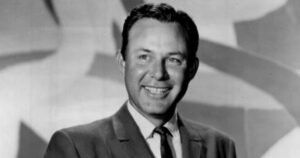
In 1960, Jim Reeves dropped a song that would go on to change the game in both country and pop music—“He’ll Have to Go.”
With its smooth vocals and lush orchestration, the track became a hit that bridged the gap between two genres, making Reeves a legend. His voice? Pure velvet. His style? Sophisticated and polished. And the song? It became a cultural phenomenon, cementing Jim as one of Nashville’s finest.
The backstory of “He’ll Have to Go”
Jim Reeves wasn’t just any country singer. Known as “Gentleman Jim,” he had this incredible ability to balance sophistication with country music’s raw emotion.
Born in Texas, he had worked as a radio announcer before diving into full-time music. By the time “He’ll Have to Go” was released, he was already a country star, but this song pushed him into another stratosphere. It wasn’t just about the tune —it was about the whole vibe he brought to the table.
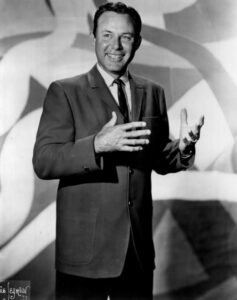
The backstory of “He’ll Have to Go” is as interesting as the song itself. Written by Joe and Audrey Allison, the song was inspired by a real-life moment Joe overheard at a bar. A man was on the phone with his lover, begging her to get closer to the phone, trying to win her back.
That became the heart of the song—the opening line, “Put your sweet lips a little closer to the phone.” It’s simple, but it’s that perfect mix of longing and vulnerability that hit home for so many.
A huge moment for country music
When Jim recorded it, he didn’t just sing it — he felt it. The production was minimal, with just enough backing to let his voice shine through. Chet Atkins, who was behind the production, kept things subtle, and the result was this intimate, emotional track that drew listeners in.
The song quickly became a hit, topping the Billboard Country Chart and even crossing over to the Pop Chart, where it hit #2. It was a huge moment for country music, showing that it could be mainstream and still keep its soul.
The impact of “He’ll Have to Go” didn’t stop with chart numbers. It became a cultural touchstone, a song that people could relate to, no matter their background. The heartbreak, the pleading—it’s universal. And Jim’s delivery? It’s that perfect blend of confidence and vulnerability. He didn’t have to overdo it—his voice just worked.
With the success of the song, Jim Reeves was suddenly a global star. He toured all over the world, bringing country music to new audiences. He wasn’t just a country singer anymore; he was an international ambassador for the genre.
The smooth, polished sound he brought to country music helped redefine it, proving that country could be sophisticated, emotional, and mainstream.
But let’s be real — “He’ll Have to Go” wasn’t just a hit; it was a game-changer. It helped popularize the Nashville Sound—a more polished, orchestral style of country music that was easier for mainstream audiences to digest. And that style became a blueprint for future artists looking to mix country with other sounds.
The song’s influence didn’t stop there. It inspired countless covers by artists like Elvis Presley and Ry Cooder. But let’s be clear—no one did it quite like Jim. His version is the one that stuck.
How Jim Reeves died
Sadly, Jim’s life was tragically cut short in 1964 when he died in a plane crash at just 40 years old. His death left a huge void, but his music — especially “He’ll Have to Go”—has kept his legacy alive.
The song stayed on jukeboxes and radio stations for years, ensuring that his smooth baritone would never be forgotten. And, of course, Jim was posthumously inducted into the Country Music Hall of Fame, cementing his place as one of the all-time greats.
Today, “He’ll Have to Go” is still one of the most loved country songs ever. It’s been featured in movies, TV shows, and commercials, introducing it to new generations. The magic of the song lies in its simplicity—it’s raw emotion wrapped in a timeless melody. It’s just one of those songs that never gets old.
Jim’s ability to blend country with pop is a legacy that’s still felt today. Artists like Shania Twain, Taylor Swift, and Keith Urban owe a lot to Jim Reeves for showing that country could cross over without losing its authenticity. “He’ll Have to Go” wasn’t just a hit—it was a moment in music history. And it’ll stay a classic for years to come.
Jim Reeves proved that country music could be emotional, sophisticated, and universal. “He’ll Have to Go” wasn’t just a song—it was a movement. And it continues to resonate, showing the timeless power of music to connect and inspire.
Share this so those who haven’t heard this masterpiece can discover Jim Reeves’ incredible talent.