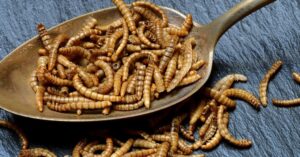
In a groundbreaking move that promises to revolutionize the American agricultural landscape, Tyson Foods has unveiled a strategic partnership with Dutch innovators, Protix. This collaboration aims to introduce insect-based protein production on American soil, reinforcing Tyson’s commitment to sustainability and efficiency.
Tyson Foods, Inc. (NYSE: TSN), a global food industry titan, is set to acquire a minority stake in Protix, a pioneering company renowned for its insect-based protein ingredients. The synergistic investment marks a pivotal moment in the growth of the emerging insect ingredient industry and offers a fresh perspective on sustainable proteins and lipids for our global food system.
An official statement from Tyson emphasizes the power of this partnership, stating, “The agreement combines Tyson Foods’ global scale, experience, and network with Protix’s technology and market leadership to meet current market demand and scale production of insect ingredients.”
But how does this collaboration benefit the United States? Tyson Foods envisions the expansion of insect ingredient facilities not only on a global scale but also within the American borders. This ambitious endeavor will see insect protein integrated into various industries, including pet food, aquaculture, and livestock farming.
John R. Tyson, the Chief Financial Officer of Tyson Foods, highlighted the circularity that insect-based agriculture can bring to their value chain, saying, “The insect lifecycle provides the opportunity for full circularity within our value chain, strengthening our commitment to building a more sustainable food system for the future.”
Protix, dubbed “the Leading Insect Company,” shares this commitment to sustainability. Their website proudly declares, “Feeding the growing world population should go hand in hand with protecting our beautiful planet.” Insects, according to Protix, offer a low-footprint source of proteins and nutrients that can be transformed into sustainable feed and food, aligning perfectly with Tyson’s vision.
CEO of Protix, Kees Aarts, is equally enthusiastic about this partnership, stating, “This agreement is a major milestone for Protix and significantly accelerates our ambition to grow through international partnerships.” It’s clear that this venture holds immense potential for both companies, as well as the planet.
However, it’s important to note that Tyson Foods currently has no plans to introduce insect protein into human food products. As per Tyson’s statement, insect-based components will exclusively find their way into pet food, aquaculture, and other animal-related industries.
Dr. Reza Ovissipour, an assistant professor in sustainable food systems at Texas A&M University, explains the significance of insects in the production process, stating, “When insects eat animal waste, they are essentially serving as ‘mini bioreactors,’ and these mini bioreactors are very inexpensive. You don’t need to apply that much energy. It’s very sustainable.”
Moreover, Protix asserts that its products are designed as “low-footprint ingredients,” offering environmentally friendly alternatives to existing animal feed and foods. The company claims they provide a “highly nutritious” solution to environmental sustainability, an essential goal in today’s world.
While the prospect of bug-based protein may seem unconventional, it’s worth noting that it aligns with the principles of conserving resources, reducing waste, and promoting eco-friendly practices. Tyson Foods and Protix’s partnership heralds a new era in American agriculture, one where innovation and sustainability go hand in hand.
In conclusion, this pioneering collaboration between Tyson Foods and Protix promises to transform the American agricultural landscape. By introducing insect-based protein production into the United States, these companies are paving the way for more sustainable, efficient, and eco-friendly practices in the food industry. While insect-based ingredients may not be on your dinner plate anytime soon, they are helping build a greener, more sustainable future for us all.