In the digital age, taking notes is simple with the help of technology. Meetings, conversations, and ideas can all be recorded with apps that help you document, or even just classic recordings. However, things weren’t so easy before these helpful inventions. In the past, taking down notes in real-time was made possible by a way of writing called shorthand.
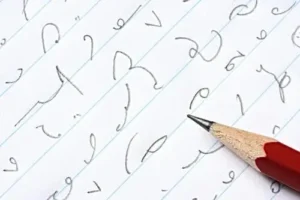
According to Encyclopaedia Britannica, shorthand was originally developed by the Greek historian Xenophon. However, it wasn’t until the Roman Empire that the writing system was popularly used to pen notes quickly as people spoke. The Latin shorthand system was used for over a thousand years before it almost disappeared during the Middle Ages.
After a long pause, shorthand gained popularity again during the Victorian Era. It was also used during the Reformation to more quickly notate Bible translations. Eventually, modern shorthand developed through demand for stenographers during the Industrial Revolution.
Sir Isaac Pitman developed a modern version of shorthand in 1837, and his brother brought the system to America in 1852. While the Pitman style was widely used in Britain, it was eventually replaced in the United States by the style of John Robert Gregg. Originally called Light-Line Phonography (1888), it later became known as Gregg Shorthand.
The term long hand referred to the long strokes used to write words, while shorthand was designed to reduce letters down to their simplest forms; this is what made it easier to take notes and document things faster. Because shorthand has little to no resemblance to the word it represents, it’s easy to mistake it for some ancient text. Because of the various dots and loops that shorten our regular method of writing vowels and consonants, some people think it resembles Arabic more than English.
With Gregg’s shorthand, people were able to take down 280 words after mastering it. The practice is not completely obsolete, as it is still used to take notes in legal, medical, and secretarial fields.
What do you think of shorthand? Have you used it yourself or know anyone who has used it before? Be sure to let us know your thoughts and pass this on to others so they can learn more about this peculiar script, too!